


The Goal is an Autonomous Paper Mill by 2035
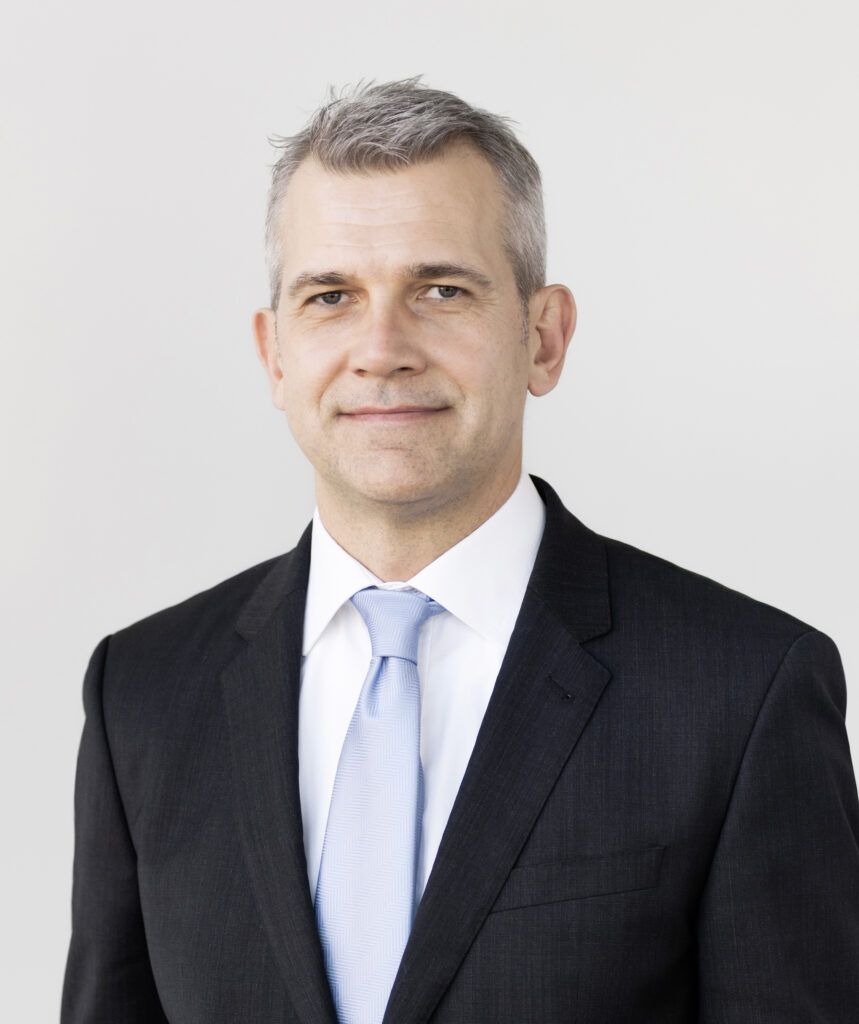
Automation, digitalisation and AI will revolutionise the industrial manufacturing of paper, says Dieter Wenninger, Regional President P&S Asia, Voith Paper. In this interview with paperASIA, he discusses the solutions Voith will offer its customers in the future to help make manufacturing more efficient while at the same time designing systems to be more sustainable. He will also explain the benefits of autonomous paper mills.
paperAsia: The Asian market has been important to Voith for decades. It’s a market where strong strategic partnerships have emerged and milestones have been reached. What’s the situation today, and what will the future look like?
Wenninger: It’s incredible but true. In 1937, Voith supplied its first paper machine to Chinese customer Min Feng Paper. With the opening up and modernisation of China, Voith has become a strong and dynamic partner. Service centres were established and Voith Paper City was opened in Kunshan. This 200,000sqm site, in which up to EUR270 million was invested, is today one of the largest production and service centers for the paper industry in the world.
We also recently opened one of our OnPerformance Labs (OPL) in Kunshan, where paper manufacturers work with us to develop solutions for automation, digitalisation and achieving their sustainability goals. This underlines the importance that the region continues to have for us.
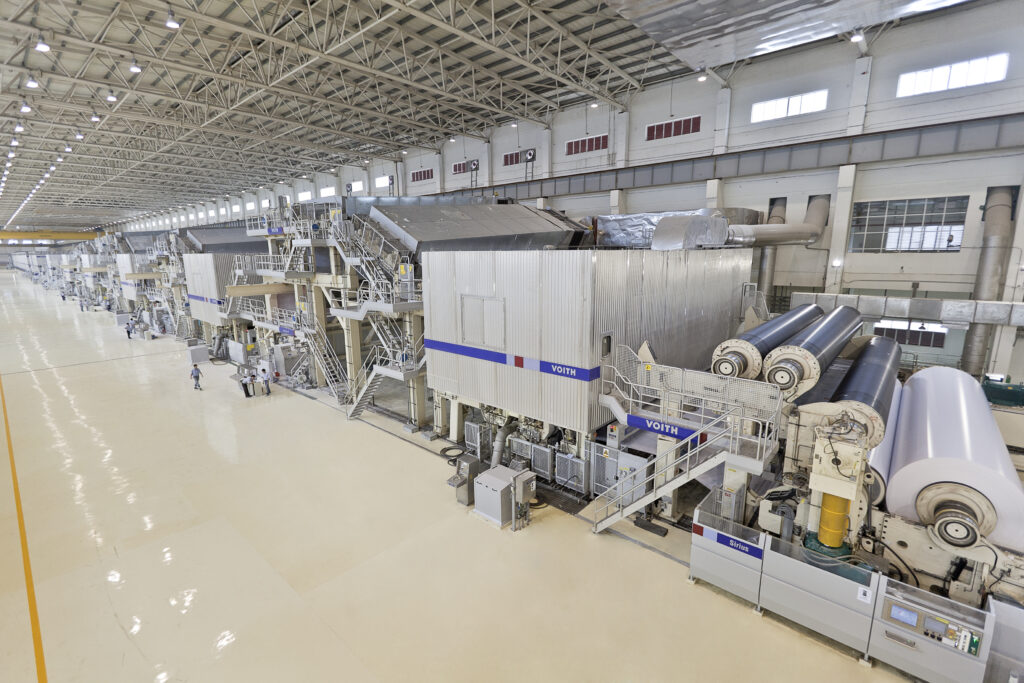
And when you talk of milestones, we have always focused on collective growth and have supplied more than 100 complete paper machines to this market. We are proud of having delivered what at that time was the world’s largest paper machine, the Hainan PM2, and also of other outstanding projects like the Nanning PM2 for Sun Paper, the rebuild of the PM11 for Shandong Huatai Paper, or the Rugao BM13 for Asia Symbol, which achieved a new speed record in 2023 with a design speed of 1,400m/min.
paperAsia: What about outside the Chinese market?
Wenninger: We are active throughout the region, and we always want to be close to our customers to understand their needs. For example, our OPL in Tokyo has been supporting customers throughout Asia for many years. In many Asian countries, we have been able to expand our position as a first-choice partner in recent years. For example, one particular success story is the XcelLine tissue machine that we supplied to Daio Paper, Japan’s leading tissue manufacturer. Thanks to our state-of-the-art tissue production technology, Daio Paper can meet the growing demand for tissue paper in Japan and produce around 54,000 tons/year of high-quality facial and toilet paper as well as kitchen paper from virgin fibres.
Another example, we supplied two complete stock preparation systems, including automation and Papermaking 4.0 products, to Malaysia for the Chinese paper manufacturer Jingxing Paper. The two BlueLine OCC systems are equipped with AOCC and have a total capacity of 2,400 tons per day. Incidentally, this project was the first time we partnered with Jingxing Paper for a complete OCC system.
paperAsia: Is Voith focusing on new projects in Asia?
Wenninger: Not only, we have also been able to implement extensive rebuilds and customer-specific optimisation projects. The rebuild of the MSE-PM2 for PT Mega Surya Eratama, which began in September 2021, is one example. The former newsprint machine in Mojokerto in East Java, Indonesia was converted into a state-of-the-art packaging production line. As with every rebuild, we have significantly increased machine availability, technological efficiency and process stability. Thanks to our expertise and cutting-edge technology, we want to enable customers to adapt quickly to changing market requirements and implement ambitious sustainability targets. The fact that the Korean paper manufacturer Moorim P&P is the first customer in Northeast Asia to use our web store to order spare and wear parts online to reduce costs is another success story that underlines our status as a full-service provider and service partner.
paperAsia: Paper manufacturing uses a lot of resources. For a long time, Voith has been working on sustainable and efficient solutions to support the transformation of the industry in its capacity as a leading full-line supplier. Where did the long-established company start with this process?
Wenninger: We’ve actually been working for years to offer paper manufacturing solutions that use fewer resources. This applies equally to energy, water and use of raw materials. As a leading full-line supplier, we scrutinise every process step in such a way as to ensure that paper quality does not suffer under any circumstances. At the same time, we want to increase the efficiency of the machines. The revised Prevo solution is a good example of this. This proven system has been made more compact so that it is now also available for retrofitting for existing systems. As up to 60 minutes of production time are lost during the transfer after breaks, Prevo makes a system significantly more economical. At the same time, the transfer is safer, as the operating personnel have to reach into the machine more to solve a problem.
Thanks to the RFID technology, our customers have access to all important information on the stock, position and life cycle of their screen baskets at all times. This intelligent add-on is unique on the market. Also, with our new MasterJet 4Tec headbox, our customers can achieve a higher paper quality thanks to improved jet homogeneity and a reduction in streaking in the formation by up to 30 percent, while at the same time achieving significant improvements in operating and energy efficiency.
Incidentally, we already ensure such advantages in stock preparation with our BlueLine products. For more than ten years, they have been a byword for lower fiber losses, optimized recycling processes, and much lower energy requirement. This has made BlueLine a gold standard for efficient stock preparation. Incidentally, Nine Dragons, one of the largest packaging paper manufacturers in Asia, operates five BlueLine OCC systems from Voith with a total production capacity of 2.5 million metric tons per year. With a market share of over 50 percent, Voith has installed more than 20 OCC stock preparation systems in China in the last few years.
paperAsia: Staying on the subject of water use, where do you stand at the moment with that?
Wenninger: Working with Meri, a Voith subsidiary, we conducted intensive research into process technologies in the field of water use and have developed and installed new technologies. One result of this close collaboration is the AquaLine family with AquaLine, AquaLine Zero and AquaLine Flex. With the water management system AquaLine Zero, we are taking things a step further and enabling paper production with closed water loops. Through our combination of anaerobic biological water treatment with cutting-edge filter systems, a kilogram of paper can be produced with just 1.5 litres of fresh water. At the same time, the volume of waste water is reduced to zero. Moreover, the biogas that occurs in the anaerobic cleaning process can be used by the manufacturer as an energy source. In this way, CO₂ emissions can be reduced by around ten percent. AquaLine Zero is thus setting a new benchmark for efficiency and sustainability.
paperAsia: Does that mean that the end of the road has now been reached?
Wenninger: We are working on pushing the efficiency boundaries even further. For example, we have developed a project for a completely CO₂-neutral manufacturing process in which the fresh water requirement is reduced by up to 90 percent and the energy requirement by up to 40 percent. At the same time, it is possible to dispense with fossil energy sources. In the meantime, this revolutionary concept has been successfully tested in the laboratory and a pilot machine has been successfully commissioned in Heidenheim. We have been working with Swedish hygiene paper manufacturer Essity on this project and are continuing to collaborate to refine the system. I am convinced that we are taking an important step towards sustainability here. We want to facilitate carbon-neutral paper production by 2030.
paperAsia: Are these kinds of efficiency improvements only possible with new systems?
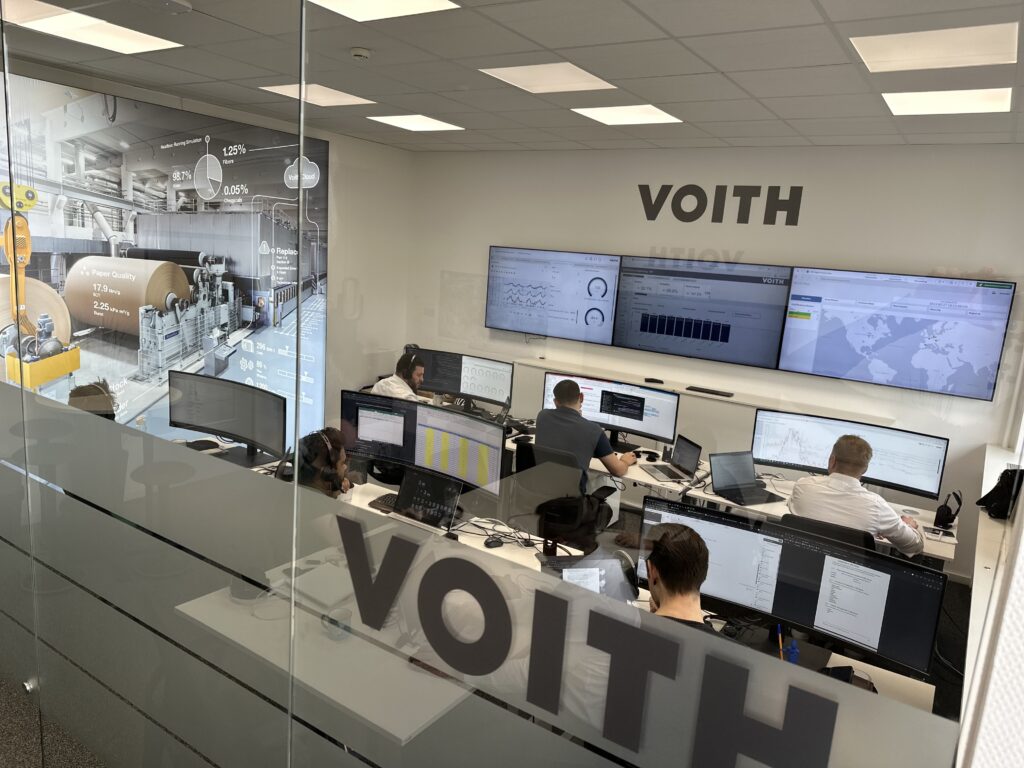
Wenninger: Automation and digitalisation can also raise existing systems to a new level of efficiency. The path to the autonomous paper factory is progressing. And with MillOne, it is already a reality.

Our newly developed ecosystem works as a central, intelligent platform that collects, stores and analyses all paper production operating data – i.e. some machines and data sources – centrally for the first time. This data is continuously synchronised so that all digital applications always have access to the latest information. This enables unprecedented consistency and efficiency in the use of data.
The use of artificial intelligence (AI) is a central element of our approach. AI algorithms analyse customer production data, optimise processes and support predictive maintenance. This means that all production parameters are automatically optimised in real time at all times. Remote access enables productive data evaluation when shifts are unmanned. This relieves the burden on operating personnel and creates new operating models. There is no doubt that MillOne is a game changer for the industry.
paperAsia: Does MillOne replace all previous automation and digitalisation programmes from Voith? And what does this mean for customers?
Wenninger: Ultimately, MillOne is a continuation of our Papermaking 4.0 portfolio, in which all cycles, consumption data and interdependencies are taken into account. We are thus creating the basis for even more efficient, sustainable and economical paper production – and thanks to its modular design, MillOne can be used independently of automation and digitalisation solutions that are already installed. At the same time, cybersecurity and IT infrastructures need to be prepared for this and future developments.
paperAsia: The autonomous paper mill will certainly change the relationship between Voith and its customers. Are both partners moving apart?
Wenninger: You see, Voith has been around for more than 150 years. And we have always worked closely with our customers and partners. And, of course, it is still one of our core tasks as a full-line supplier to offer our customers a broadly diversified portfolio of solutions that goes beyond digitalisation. With the developments in the shoe press and headbox range, for example, we have provided our customers with key components that give them an answer to the main market requirements of the coming years: They enable efficiency increases and cost optimisations with which they can counter the looming overcapacities.
We will also remain just as indispensable as a service partner. Here, too, we have developed numerous aftermarket solutions in recent years that increase the profitability and competitiveness of our partners, such as the Mill Resident Service, to name just one example.
paperAsia: How might our readers understand the concept?
Wenninger: With Mill Resident Service, experienced Voith experts take over the entire technical support of paper production directly on site at the customer’s premises. Depending on the service package selected, the scope ranges from regular maintenance to rapid troubleshooting. At the customer’s request, we assume responsibility for all maintenance and repair work. In order to optimise maintenance, we analyse the existing maintenance system and expand it if necessary, integrating preventive and predictive maintenance processes. At the same time, a failure mode and effect analysis are carried out to determine a suitable maintenance concept for the complete equipment of the individual process lines. This allows unplanned downtimes to be minimised, productivity to be increased and the economic operation of the plant to be secured in the long term. All progress is monitored using jointly defined key performance indicators. With this concept, the partner therefore benefits from an improvement in overall plant efficiency and a reduction in its specific maintenance costs. The Mill Resident Serv service strengthens our relationship with the partner. In Asia, 15 partners in China, Japan, Korea, Indonesia and Thailand are already taking advantage of the Mill Resident Service.
The Mill Resident Serv Service obviously also strengthens our relationship with our partners. A close collaboration with our customers is at the heart of the Voith philosophy and will be firmly anchored there in the long term. Therefore, the existing solutions on the path to autonomy are being implemented step by step, always taking into account individual customer requirements as well as regional requirements, laws and environmental regulations. The local working culture or the availability of skilled workers also play a role in the actual implementation. Our solutions are always designed to be readily integrated into existing production landscapes.
About Voith Group
The Voith Group is a global technology company. With its broad portfolio of systems, products, services and digital applications, Voith sets standards in the markets of energy, paper, raw materials and transport. Founded in 1867, the company today has around 22,000 employees, sales of EUR5.2 billion and locations in more than 60 countries worldwide, and is thus one of the larger family-owned companies in Europe.
The Group Division Voith Paper is part of the Voith Group. As the full-line supplier to the paper industry, it provides the largest range of technologies, services and products on the market, and offers paper manufacturers integrated solutions from a single source. The company’s continuous stream of innovations facilitates resource-conserving production and supports customers in significantly reducing their carbon footprint. With its comprehensive automation products and leading digitalisation solutions from the Papermaking 4.0 portfolio, Voith offers its customers state-of-the-art digital technologies to increase the availability and efficiency of their systems in all areas of the production process.
