

EUROSAC Highlights Continued Reduction in Paper Sack Carbon Footprint
The European paper sack industry continues to demonstrate measurable progress in reducing its environmental impact, according to the latest ESG carbon footprint fact sheet released by EUROSAC.
Based on a comprehensive life cycle assessment conducted by the European Paper Sack Research Group in collaboration with CEPI Eurokraft, the findings confirm a sustained downward trend in emissions across the value chain. The analysis highlights that the carbon intensity of paper sacks has improved significantly over the long term, reflecting ongoing optimisation in raw material use, energy efficiency and production processes.
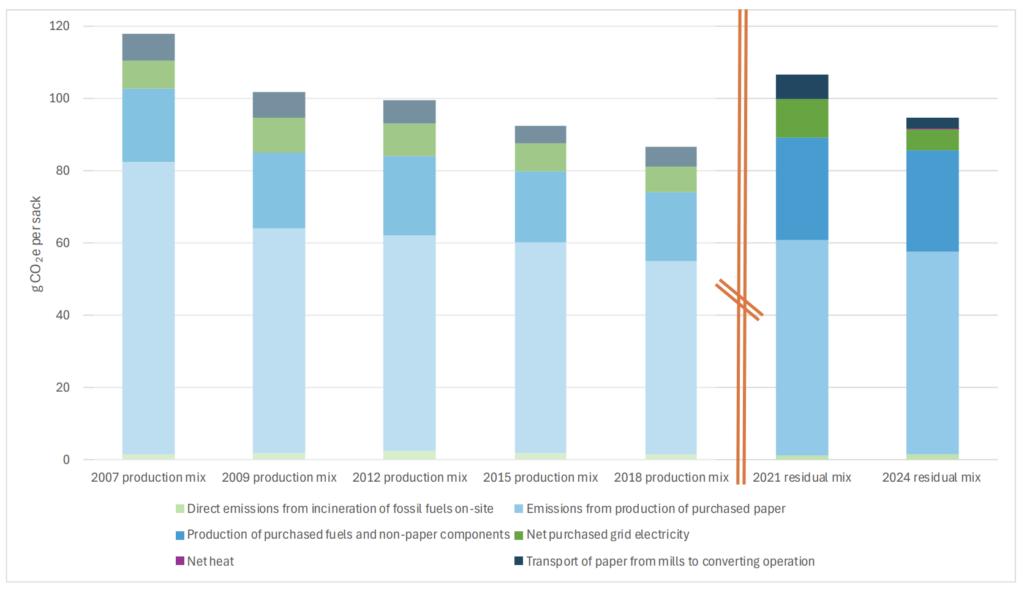
Between 2007 and 2021, the fossil carbon impact per tonne of sack kraft paper declined by approximately 26%, while the carbon footprint per individual paper sack was reduced by around 28%. More recent data also shows continued incremental gains, with further reductions recorded between 2018 and 2021, underscoring the industry’s commitment to continuous improvement.
Production of sack kraft paper remains the dominant contributor to overall emissions, accounting for the majority share of the cradle-to-gate carbon footprint. However, increased reliance on renewable energy sources and improved process efficiencies have played a critical role in driving emissions lower. Notably, biofuels now account for a substantial portion of on-site energy use, while mills are increasingly generating their own electricity.
The fact sheet also reinforces the role of paper sacks within a circular economy framework. As a fibre-based packaging solution, paper sacks not only rely on renewable raw materials but also store biogenic carbon throughout their lifecycle, with recycling further extending this benefit.
Looking ahead, the industry is aligning its efforts with broader decarbonisation goals, including the development of a net-zero pathway covering all emission scopes. Continued collaboration across the value chain is expected to be key in achieving further reductions and strengthening paper sacks as a low-carbon packaging solution.
