


Building the Digital Foundation for AI in Pulp, Paper and Tissue
As artificial intelligence reshapes industrial operations, digitalisation is becoming increasingly important to the pulp, paper, tissue and packaging sectors. Jarmo Ropponen, Head of Asia-Pacific and global Head of Tissue, Pulp, Paper and Fibre at Tieto Indtech, discusses the region’s digital maturity, the role of manufacturing execution systems (MES), and how AI can drive operational efficiency.

paperASIA: You lead Tieto’s Pulp, Paper and Fibre Industries operations in Asia-Pacific and its global Tissue business. What are your key priorities, and could you briefly introduce Tieto Indtech?
Jarmo Ropponen: Tieto is one of the largest IT services, consulting and software companies in the Nordic region, with annual revenue of approximately EUR1.8 billion and a global customer base. Its businesses span banking and financial services, healthcare and social care, and technology consulting, alongside industry-specific software solutions.
My unit, Pulp, Paper and Fibre (PPF), is part of Tieto Indtech, which focuses on industry-specific software and services. We are particularly proud of TIPS (Tieto Integrated Paper Solution), our manufacturing execution system (MES) software, which is a leading MES solution for the paper industry.
I have worked in the pulp and paper industry since 1988, holding various leadership positions and collaborating with many leading companies. Over the past three years, I have been based in Kuala Lumpur to accelerate our growth in Asia. We established a new business hub here to strengthen customer relationships and expand our local capabilities, particularly across the fast-growing ASEAN markets. Tieto has operated in China since 2002 and India since 2004.
In addition to leading our global Tissue business, I serve part-time as CEO of our Malaysian entity, ensuring compliance with company policies, operating models and local regulations.
My priorities are business development, solution sales and helping customers understand industry best practices in digitalisation and AI. I also focus on raising awareness of Tieto’s industry-specific solutions through customer engagement, industry events and presentations across the region.
paperASIA: Tieto has been investing in AI, cloud-native platforms, data and industry-specific software. Which innovations are you most excited about, and how are they delivering practical value to customers?
Jarmo Ropponen: We invest significantly in industry-specific MES solutions for the pulp, paper and fibre sectors. Recent developments include TIPS Web, with embedded AI capabilities, as well as dedicated MES solutions for tissue, pulp and corrugated packaging. Customers can also access scalable deployment models, including TIPS SaaS on Microsoft Azure.
We have co-developed solutions with customers, including TIPS OMS (Operations Management System) and TIPS EUDR. These offerings are supported by TIPS eLearning, available in multiple languages, and our TIPS user community.
Our AI journey began years ago with traditional machine learning and has increasingly focused on generative AI in recent years. In 2024, we introduced TIPS AI, integrating generative AI capabilities into our MES platform using Azure OpenAI. Its first component, TIPS Co-Pilot, supports knowledge workers through on-demand reporting and work-assistance capabilities.
Since early 2025, we have continued developing AI One Touch capabilities and exploring the use of AI agents.
We are entering a period of rapid transformation. Companies with a strong digital operational backbone, supported by MES, are better positioned to access high-quality, trustworthy data. This is essential for informed decision-making and effective AI deployment. Without reliable data, AI cannot deliver its full potential.
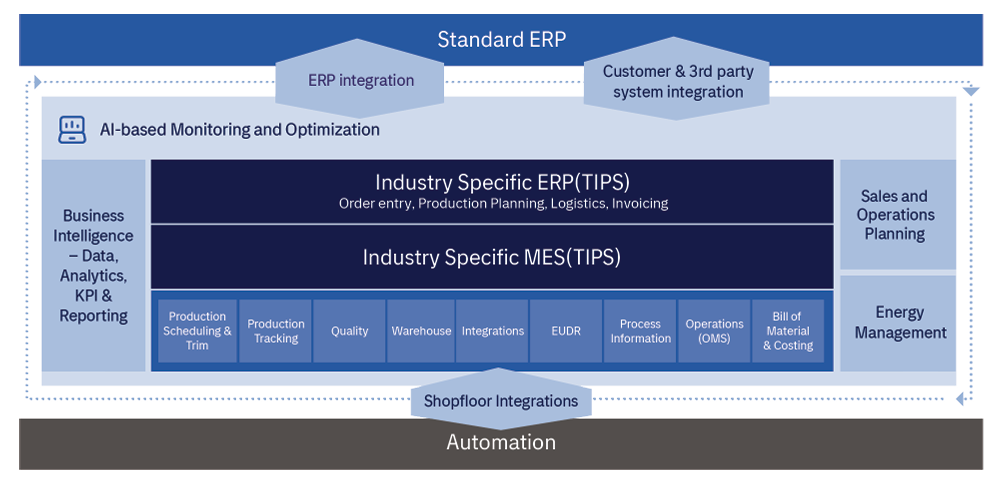
Tieto Pulp and Paper Industry Specific Solution Portfolio Overview
paperASIA: Where do you see the greatest opportunities for AI and digitalisation in the pulp, paper and tissue sectors today?
Jarmo Ropponen: There is still considerable scope for digital transformation across the industry. Many companies need to improve how they plan and execute major business transformation programmes. Historically, investments have often prioritised production capacity and new machinery, while digitalisation has received insufficient attention during investment decisions.
For leading companies, digitalisation has long been part of normal operations, but this is not yet the case across the wider industry. AI is now making transformation even more urgent, highlighting the need for organisational agility, an innovation-driven culture and new ways of working.
The potential applications of AI are extensive, but success depends on high-quality, trustworthy data and robust cybersecurity. Without reliable data, the principle of “garbage in, garbage out” applies.
For most companies, the first priority should be strong leadership commitment to digitalisation and AI, supported by a structured transformation programme. Establishing a digital operational backbone is a critical foundation.
Industry-specific AI agents will initially act as co-workers, assisting employees with tasks and decisions. Over time, they will take on increasingly autonomous roles, helping move the industry towards the concept of the autonomous mill.
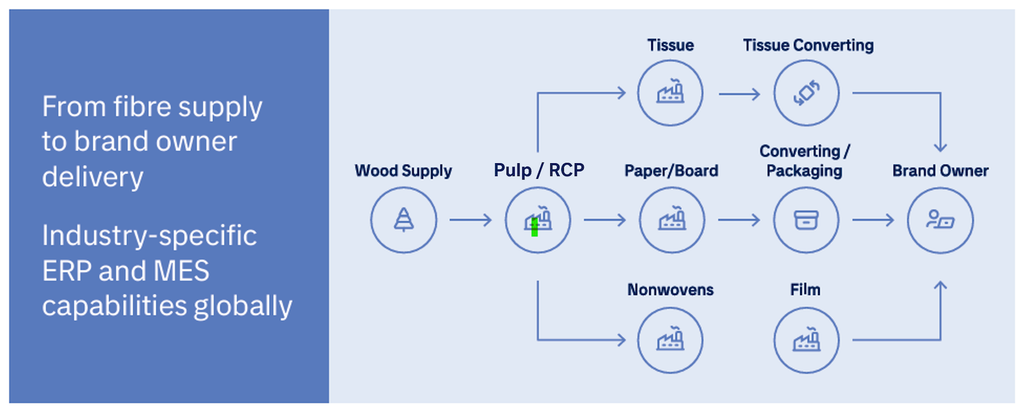
Tieto Industry Specific ERP and MES Solutions Value Chain
paperASIA: How would you describe the current technology landscape across Asia-Pacific, and which trends could accelerate digital transformation in the coming years?
Jarmo Ropponen: Across Asia, investment has traditionally focused on expanding production capacity, with digitalisation often taking a secondary role. Many companies still rely on manual processes, paper-based records and spreadsheets, with limited digital systems supporting their operations.
Management practices and organisational cultures can also hinder the adoption of more transparent, digitally enabled ways of working. Asia-Pacific is a diverse market, with companies at very different stages of digital maturity. While some emerging leaders are making encouraging progress, many businesses still lag behind industry front-runners.
There is significant potential for companies to accelerate their transformation by adopting industry-specific MES solutions, particularly through cloud and software-as-a-service (SaaS) deployment models that can simplify implementation.
These systems help mills adopt industry best practices, improve key performance indicators such as overall equipment effectiveness (OEE) and on-time-in-full delivery (OTIF), and drive continuous operational improvement. They also provide the reliable data needed to support data-driven decisions by employees and, increasingly, AI-assisted operations.
paperASIA: What will be the next major shift in industrial technology, particularly in AI and generative AI, and how should companies prepare?
Jarmo Ropponen: Generative AI represents a major transformation that requires active leadership and a clear implementation strategy. For many companies, the priority should be to establish a digital operational backbone through MES and integrated supply chain solutions.
Cloud and SaaS platforms can help companies access data more easily and adopt new technologies, particularly AI, as they become available.
For companies that already have a strong digital foundation, the next step is to accelerate experimentation and deployment of AI agents, establish the necessary orchestration and redesign business processes to incorporate AI where it adds value. Automation and end-to-end integration will continue to expand, and I expect industry-specific robots to become more common in mill operations.
Earlier this year, we released the results of our Global Tissue Industry Study, conducted in collaboration with Tissue World. The findings highlighted changing priorities across the tissue market. It was encouraging to see that companies increasingly recognise the importance of digital solutions, including enterprise resource planning (ERP), MES and sales and operations planning (S&OP), alongside improvements in data and AI capabilities.
In Europe and the United States, data and AI had already emerged as the leading priorities. Across the industry, production, quality and S&OP were identified as areas attracting significant investment in AI and new technologies.
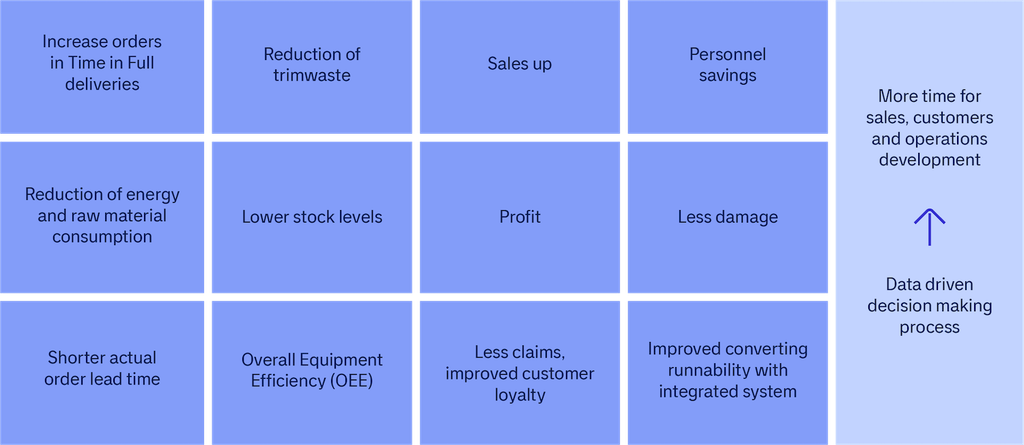
Tieto MES Solution Customer Benefits Examples
paperASIA: Finally, what are your ambitions for Tieto and the wider technology industry in Asia-Pacific? What would success look like for the company and its customers?
Jarmo Ropponen: My ambition is for more companies across Asia-Pacific to recognise the value of MES and use it to drive continuous efficiency improvements, support more sustainable operations and establish data-driven ways of working, with AI playing an increasingly important role.
We want Tieto to be a trusted partner for companies pursuing digital transformation and implementing MES solutions that deliver measurable business value. Through TIPS and services such as cloud and SaaS deployment, we aim to help customers accelerate transformation and realise benefits sooner.
The ongoing global data centre expansion also presents opportunities for the pulp, paper and packaging industry to evolve alongside this growth. There is considerable room for us to expand across different markets and regions. While we are already the largest industry-specific MES supplier in China, we are at an earlier stage of development in several other Asian markets.
Ultimately, success means building long-term, mutually beneficial partnerships with customers and ensuring that investments in digitalisation translate into tangible operational improvements and sustainable business results.
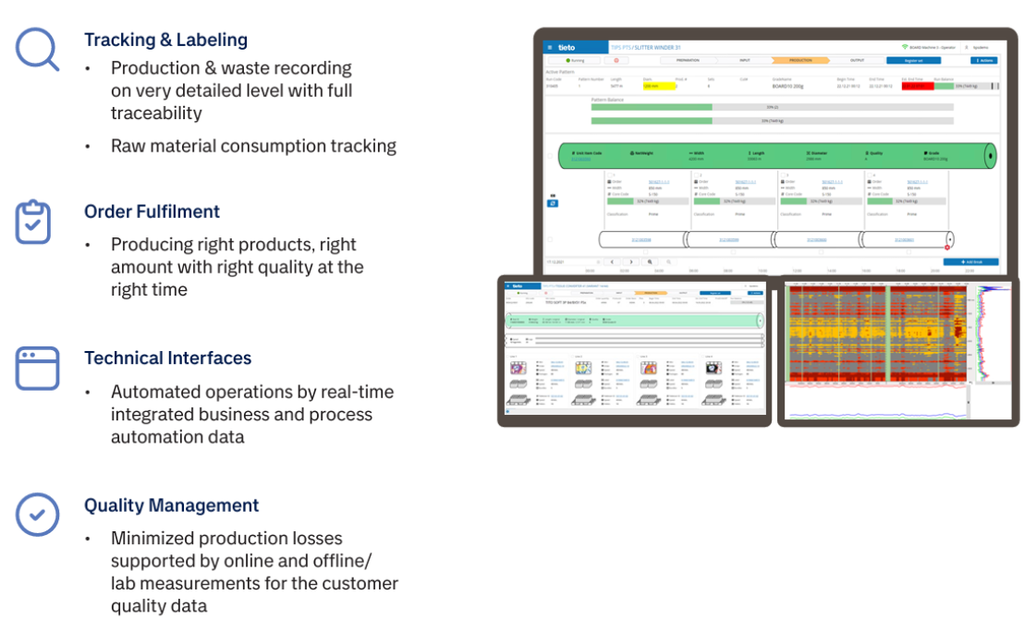
Tieto TIPS MES – Your Operational Digital Backbone
