

MERS by Maflex: Energy Regeneration Applied to the Tissue Industry
By: Andrea Tomei, Area Sales Manager
An innovative system that transforms energy waste into a resource, bringing efficiency and sustainability to tissue converting lines.
Turning “lost” energy into value
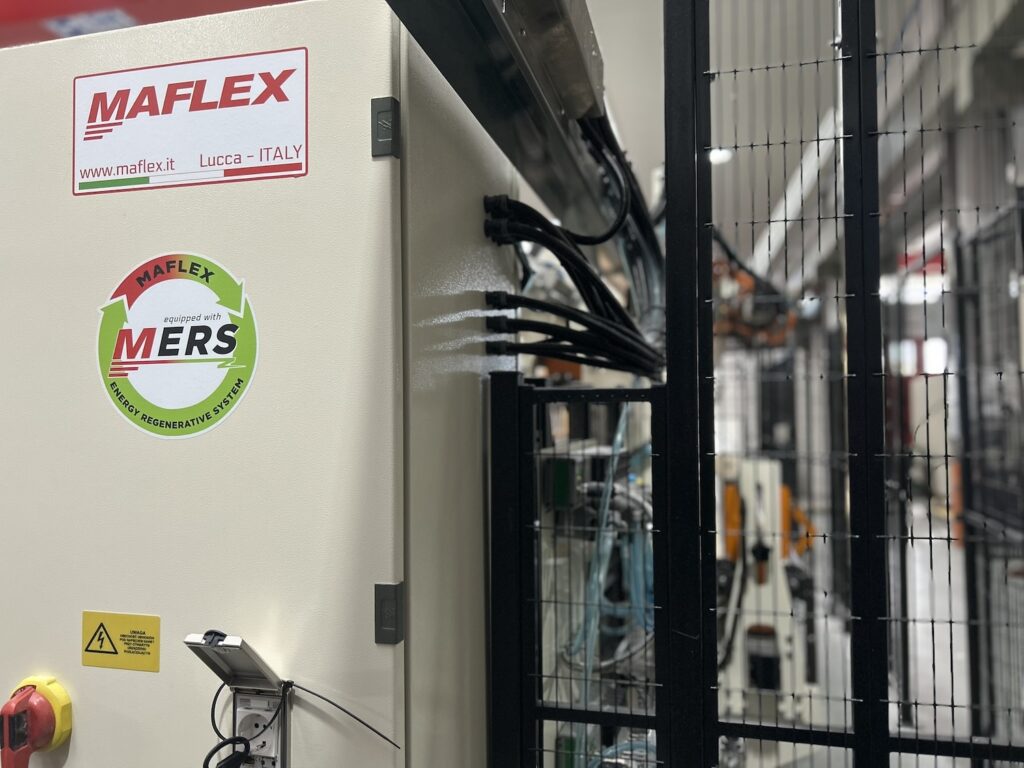
In tissue converting, every braking and deceleration phase represents a missed opportunity. Traditionally, the kinetic energy generated during machine deceleration is simply dissipated as heat through resistors, contributing to equipment overheating and energy waste. Maflex has developed a solution: MERS (Maflex Energy Regenerative System).
From motorsport to the paper industry
The principle behind MERS is the same used in Formula 1’s MGU-K system: instead of wasting energy during braking, it is recovered and reused. Just like in F1 cars, where the electric motor also acts as a generator during deceleration, MERS converts kinetic energy into electrical energy that can be fed back into the plant grid or used by other equipment.
A modular design that makes the difference
Founded in 1997, Maflex has built its reputation on automation and efficiency. The key to MERS lies in the company’s modular design philosophy: each unit within the converting line is self-standing and equipped with its own dedicated electrical cabinet. This architecture enables selective and scalable integration of the regenerative system, without the need to redesign the entire production line.
How MERS works
At the core of the system are:
- Motor drives, ensuring precise control of module motors
- A shared 24V DC bus, creating a “communicating vessels” effect between drives
- An AFE (Active Front-End) regenerative module, enabling bidirectional energy exchange between the machine and the electrical grid
When a motor decelerates, its braking energy is transferred through the shared DC bus to another motor that is accelerating. Any excess energy is then fed back into the plant’s electrical network.
The numbers that matter
Maflex case studies demonstrate the system’s real effectiveness:
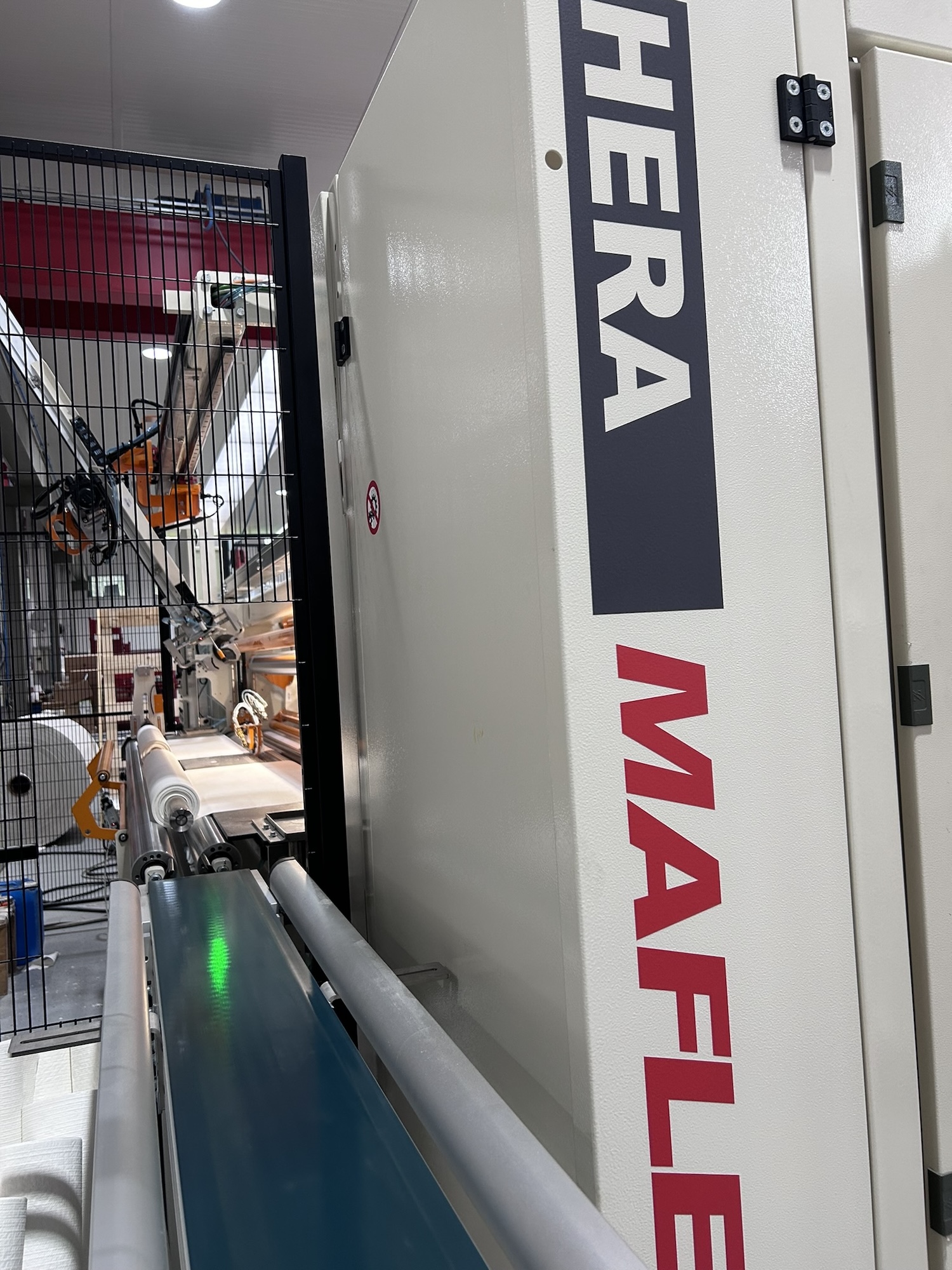
Case 1 – Start/Stop Rewinder (HERA model)
- Machine energy consumption: 3.7 kWh/hour
- Regenerated energy: approx. 2 kWh/hour
- Regeneration rate: up to 50%
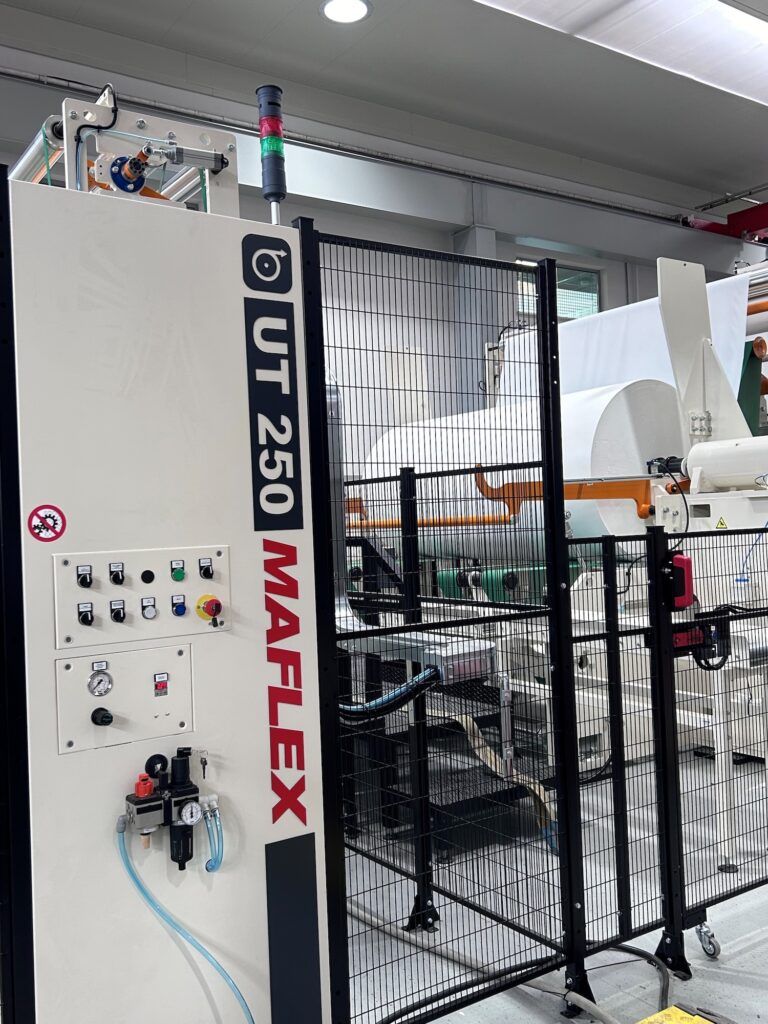
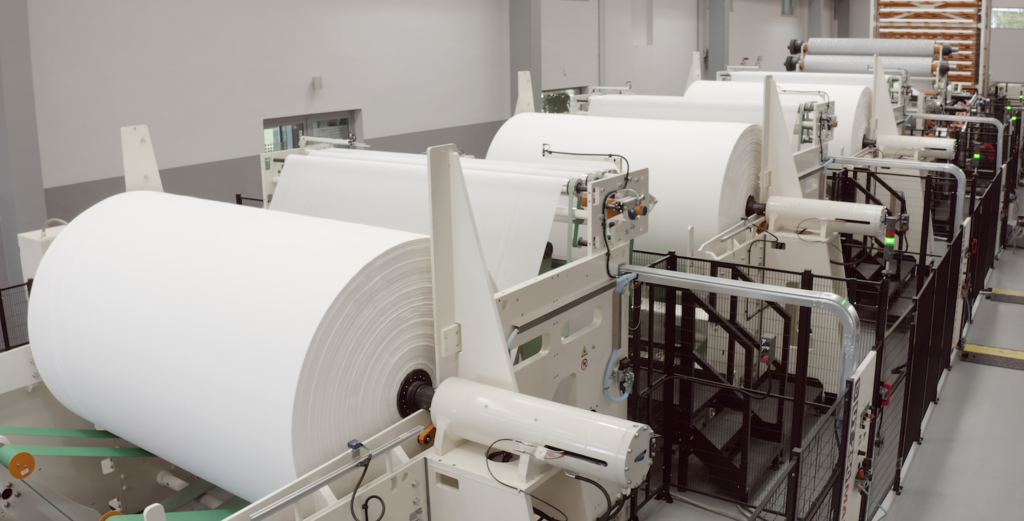
Case 2 – UT250 Unwinder with eccentric jumbo reel (2500mm diameter)
- 5% reduction in energy consumption during acceleration
- 10% reduction at constant speed
- Overall effect: energy recovery + peak load smoothing
Case 3 – Continuous line
In a high-speed line with at least two unwinders and a 4-lane orbital log saw, MERS eliminates the need for dissipative resistors with a total power exceeding 10kW, recovering energy that would otherwise be wasted.
The hidden advantage: harmonic mitigation
Beyond energy recovery, MERS provides a crucial and often underestimated benefit: harmonic distortion reduction.
The AFE module acts as an active filter, improving power quality and reducing issues such as:
- Component overheating
- Increased transformer temperature
- Random breaker tripping
- Reduced motor lifespan
- Higher energy costs
Unlike passive filters, the active solution integrated in MERS is more robust and reliable.
Toward a circular economy
With a global presence spanning the Americas, Oceania, Europe, Africa and the Middle East, Maflex is contributing to the transition of the tissue industry toward regenerative production models.
Introduced in 2010, MERS is now a mature and proven solution for companies aiming to:
- Increase system efficiency
- Reduce operating costs
- Improve plant reliability
- Strengthen environmental performance
The system can be installed on new lines or as an upgrade to existing modules, offering flexibility and scalability based on each plant’s specific needs.
Towards a more sustainable tissue converting process
In an industrial context characterised by rising energy costs and increasingly strict sustainability regulations, solutions like MERS are not just a competitive advantage, but a strategic necessity.
Turning every deceleration into an opportunity for energy savings means embracing the principles of the circular economy—where nothing is wasted and everything is valued.
About Maflex
Maflex operates since 1997 in the tissue converting machineries industry. The experience gained over the years has led us towards specialising in the manufacturing of complete tissue converting lines. The philosophy pursued by the management of Maflex is to build modern machinery in the symbol of reliability. Particular importance is given to safety, ease of use and to personalisation according to the customer’s requests.
